Tuesday, May 7, 2013

Linoleum Prints

Linoleum Block Prints
Grade 4

We are going through the process of creating linoleum block prints.  This technique creates a relief printing plate.  After drawing or transferring an image on the surface of a rubber block, the artists uses tools to cut away the areas that will not print.

Common tools used in printmaking:


Print Blocks                                                                       Linoleum Cutters


Brayer with Ink
Students started sketching a design using their initials or name with pencil.  We did this on paper and then transferred it to the linoleum block.

Sketching on Paper
Retracing Pencil Transfer

Cutting Blocks with
Safety Lino Cutters

The Linoleum block is now ready to print

Inking the Printing Plate


Printing


Printing

Printed Work #1

Printed Work #2

After printing, students used oil pastels to color in the negative spaces, keeping the design symmetrical. What you see here is the final and finished product.


Weaving

Watercolor Weaving
Grade 3


Students practiced a few basic watercolor techniques on two pieces of paper.  The first paper was the wet-on-wet technique with the warm colors.  The second paper was straw blowing with the cool colors.  The final project required students to assemble a paper loom and weave cut up paper strips.  This introduction with paper gave us experience understanding how baskets and textiles are made.


                                                              Students Work In Progress


Monday, May 6, 2013

Coil Pots

Grade 2


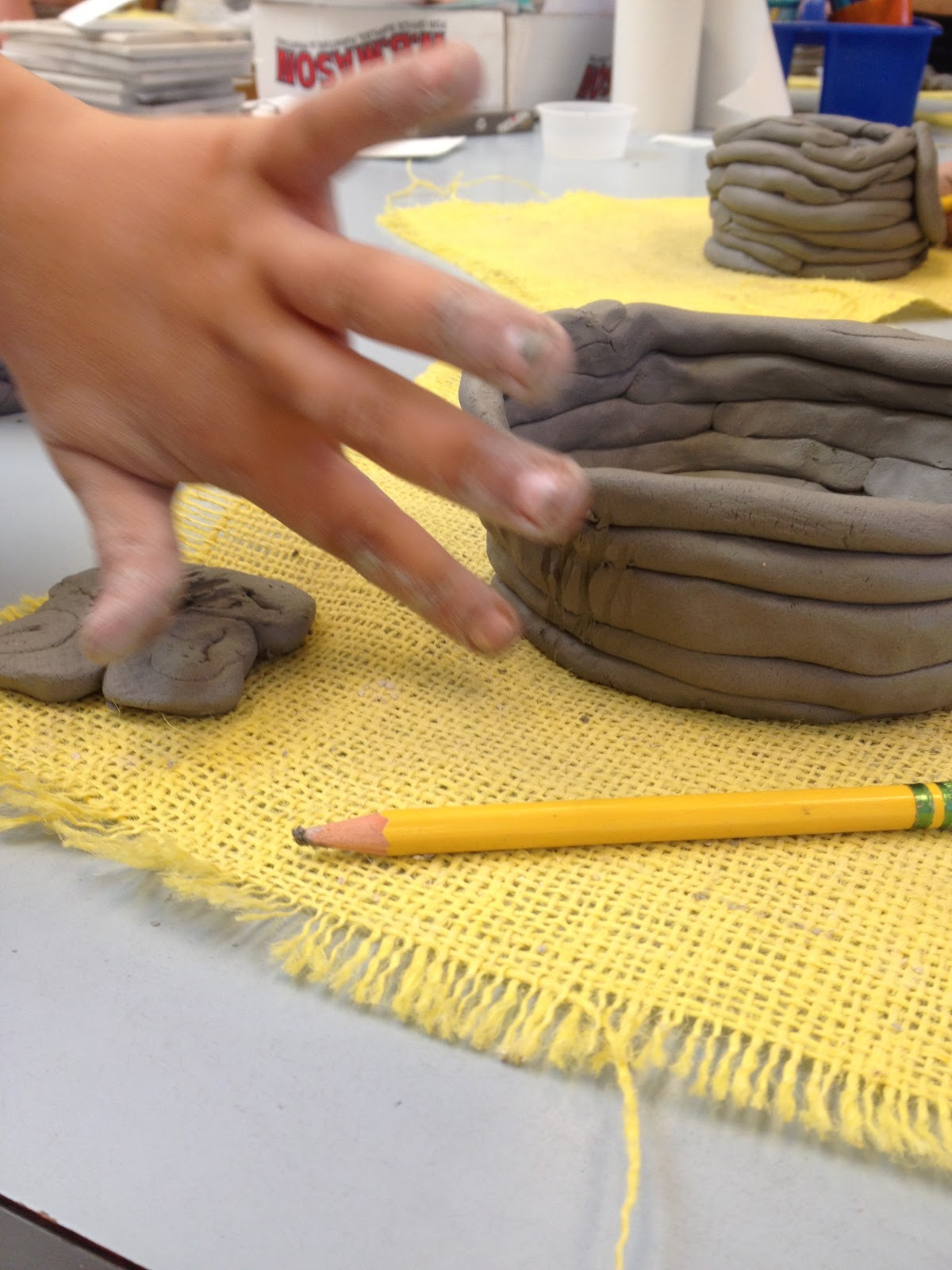
Students built a clay pot using rolled coils.  This is a simple hand building technique that has been used thousands of years.   


Rolling the Clay

To add pieces students learned how to scratch & slip the clay.  This process helps our clay stick like glue, otherwise the pieces would fall off in the kiln.


Coil pots waiting to air dry before going in the kiln.                                    The Kiln


Students glazing coil pots.


                                                                Students final glazed pots.


Clowns

Clowning Around

Grade 1

Students studied the work of Georges Seurat called The Circus.  We compared the similarities and differences of how the circus performers were portrayed in the past to what we see today.

Georges Seurat
The Circus, 1891
Storybrook Circus at Magic Kingdom


In the students artwork, students focused on drawing the clowns facial expressions with geometric and organic shapes.  Careful thought and details were also put into what type of clothing or accessories the clowns were wearing.  Last a background portraying where the clown was at or what activities they may be doing were added.


Student work in progress


Saturday, April 13, 2013

Paul Klee

Grade 3

Students studied the work of Paul Klee. The inspiration for this piece was based on the artwork titled Head of a Man, also known as Senecio. Using organic and geometric shapes, student recreated their interpretation of an abstract figure.

Paul Klee
Title: Senecio (Head of a Man)


Works in progress


Finished Work


Matisse Interiors

Grade 4

Students were introduced to the artwork of Henri Matisse by exploring an interactive website - www.artbma.org/flash/f_conekids.swf


Then students created an interior scene in the style of Matisse that included at least the following: 2 walls and floor, fish bowl or aquarium, table, plant, window or picture, and bright colors with patterns.


Student Sketches (below)


        Students Finished Work

Example 1

Example 2

Panda

Grade 1

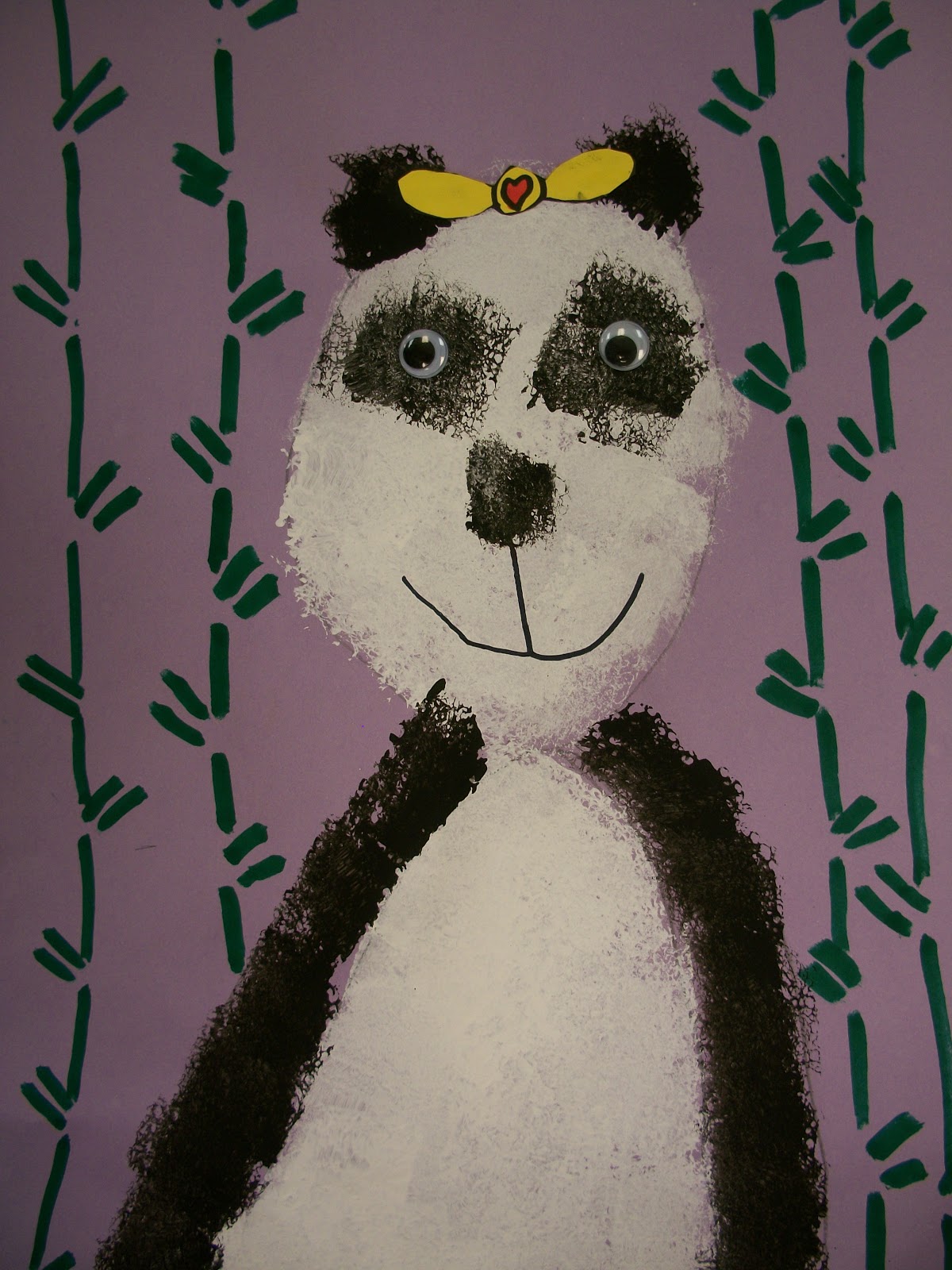
Students learned about panda bears and created a work of art using texture.  The texture of the panda was created using a sponge dipped in liquid tempera paint.  In the background are dashed lines drawn with markers to create the bamboo.


              Student Work (below)


Texture - Texture is the feel or look of a surface. Texture is an element of art.  Actual textures can be felt or suggested in artwork.


Albert Durer created this woodcut from a written description of the arrival of an Indian rhinoceros in May of 1515.  No rhinoceros had been seen in Europe for over 1000 years, so Durer work was completed without actually seeing the animal.  Therefore, it is not an entirely accurate representation of a rhinoceros, but his interpretation.  He covered the creatures legs with scales and the body with hard patterned plates.

Albrecht Dürer (German, 1471-1528)
British Museum, London.
Title:  The Rhinoceros                                                                         Indian Rhinoceros Photograph